Quickies

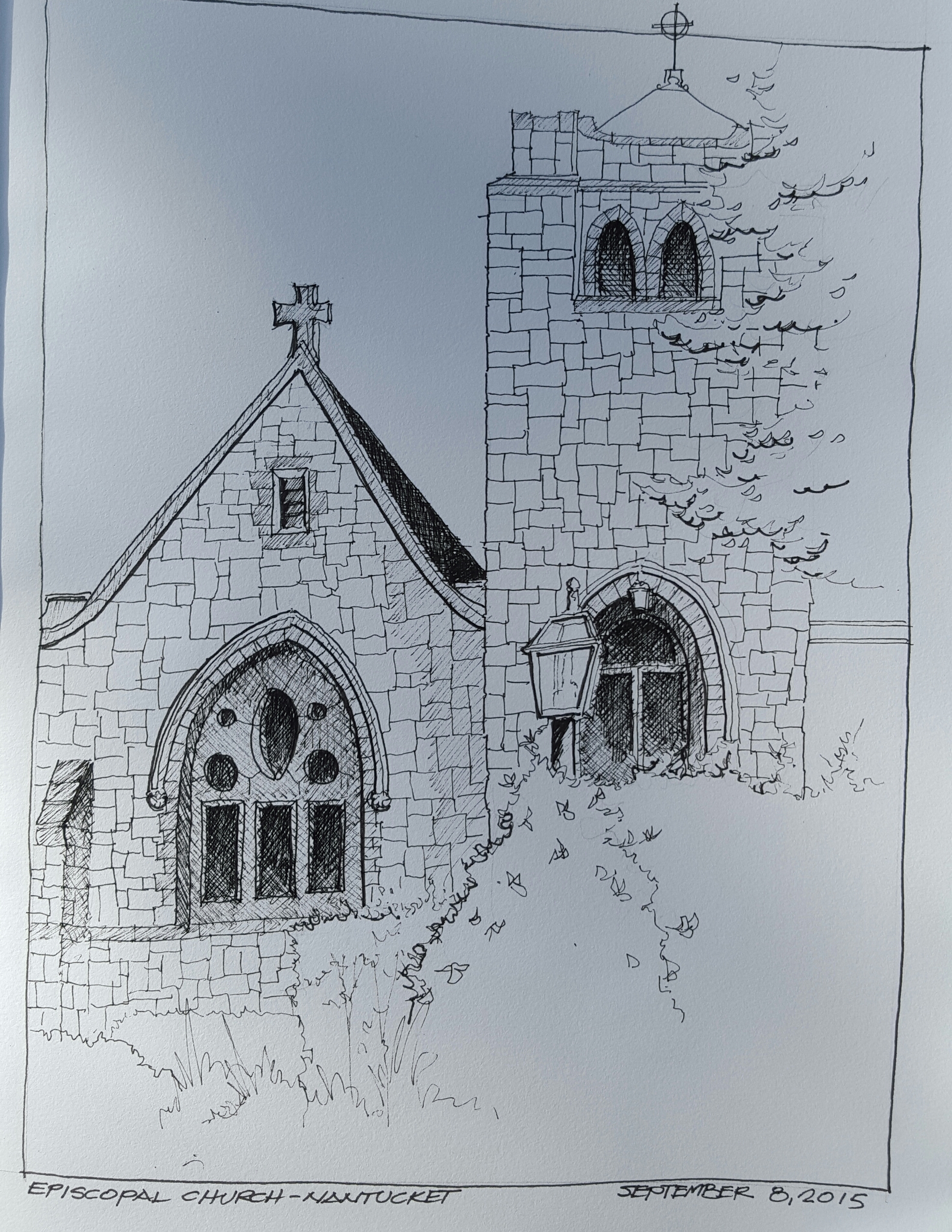
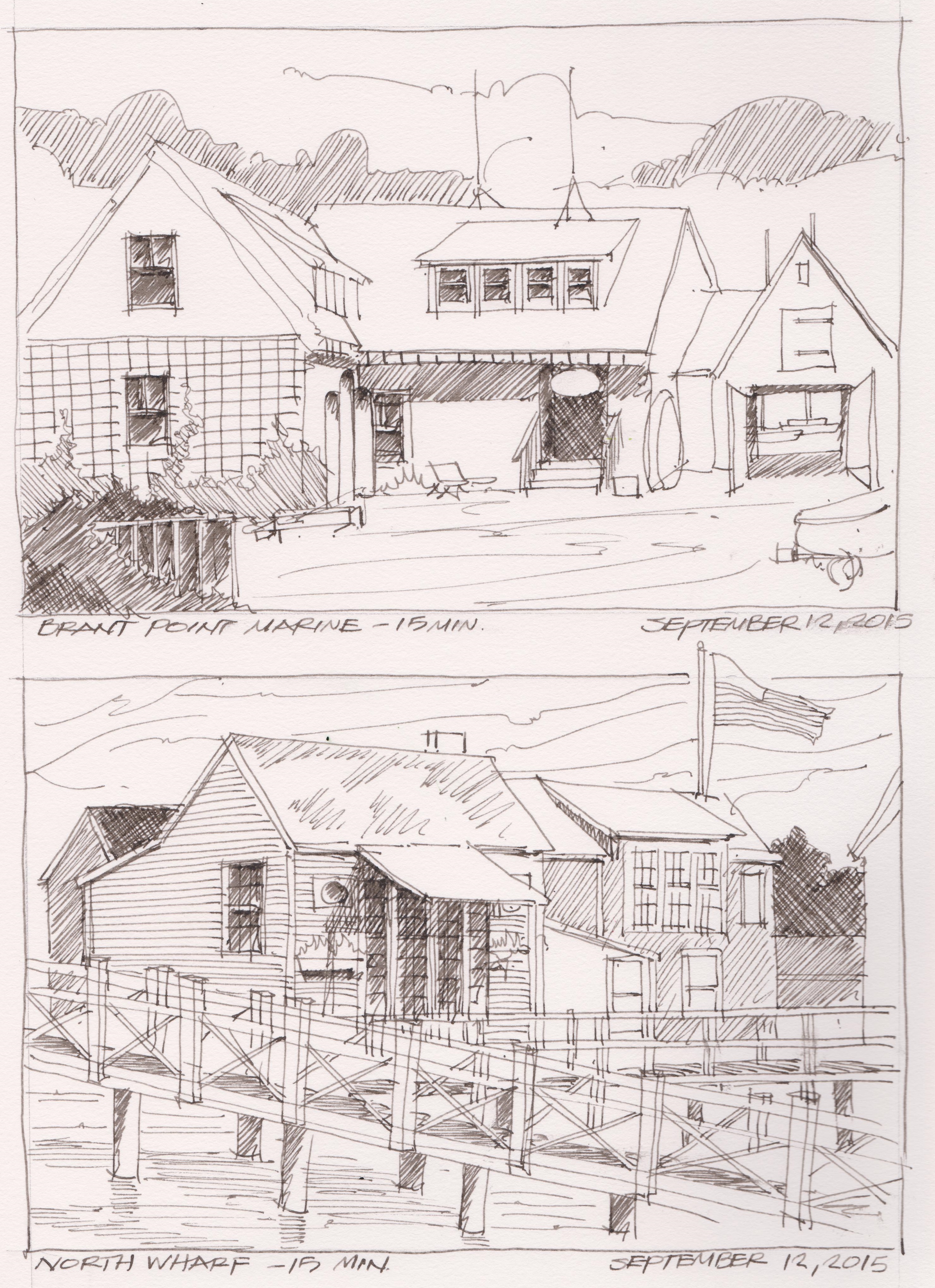
Another couple of quick value studies from Nantucket. As a challenge to try to be quicker and looser. I made a limit of 12-15 minutes for each of these sketches. They are still pretty tight, but there is a looseness to them. The top one is a view from the ferry terminal looking back at a couple of cottages on the piers over the water. The second is of a marina building that had a garage shop with large doors on the front and rear that opened to the view and harbor just outside the doors. Pilot Namiki Falcon fountain pen with Noodler’s black ink in a Stillman and Birn sketchbook.
2015-09-12 Quickies

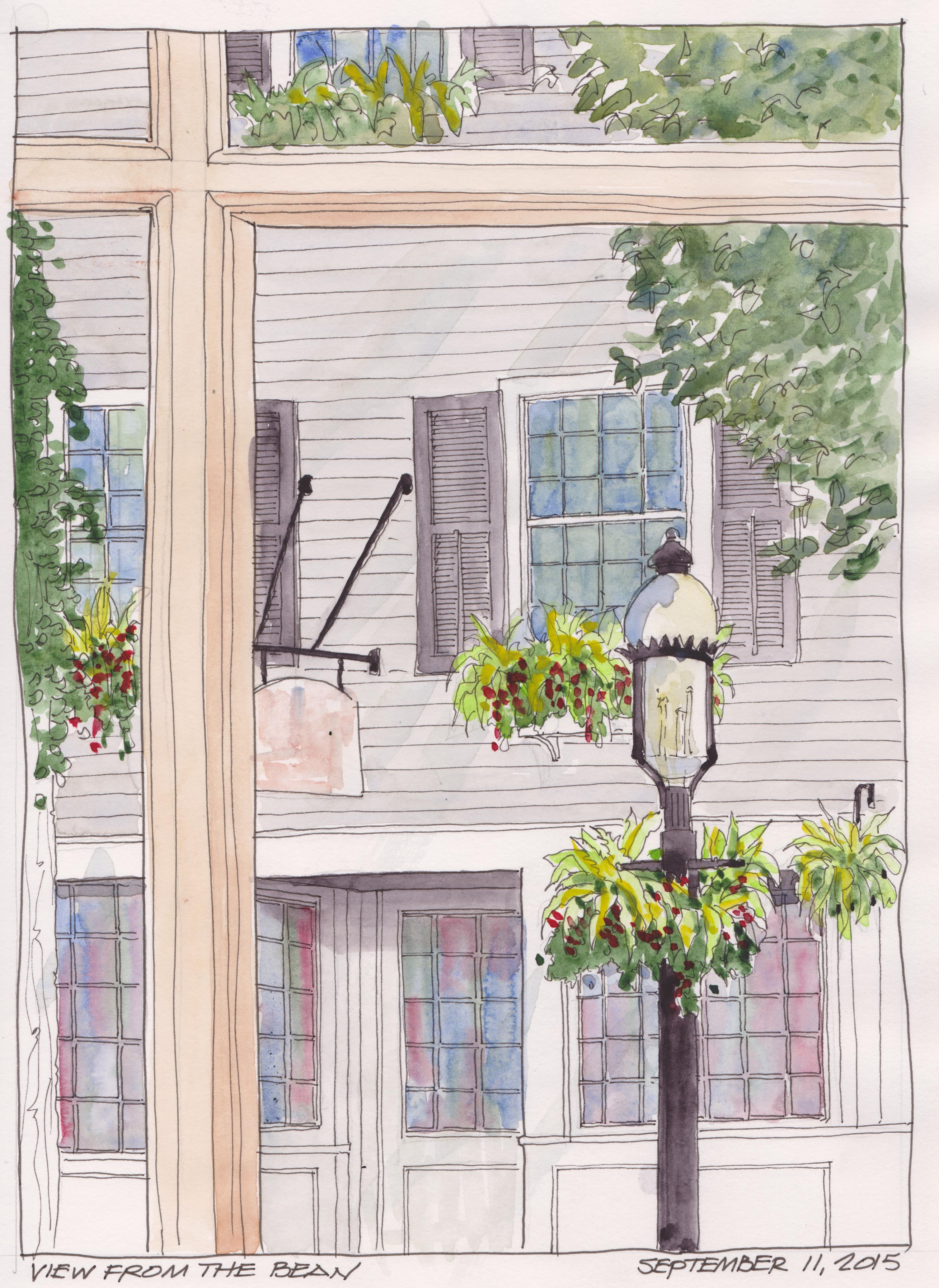
From the Bean

Another early morning sketch. It poured rain last night so there is nowhere outside to sit and sketch where it is dry. This is the view from The Bean coffee shop. I sat at the window counter and sketched the view across India Street. Classic New England Architecture is everywhere in this town and on the island. We leave later today and it has been a fantastic trip. Faber-Castell Pitt pens with Holbein watercolors in an Alpha Series Stillman and Birn sketchbook.
2015-09-11 From the Bean

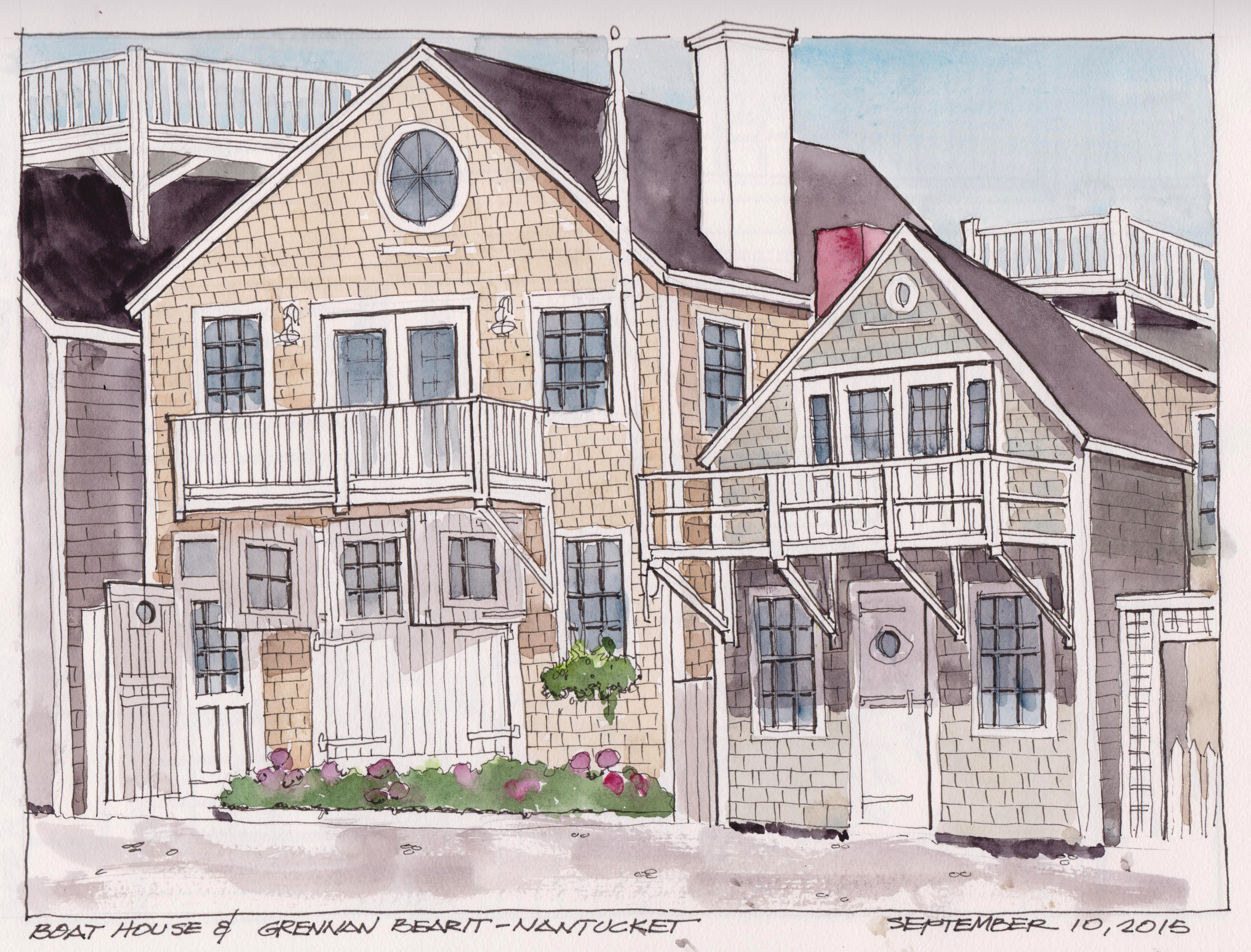
Boat House and Grennan Bearit

Another beautiful morning on Nantucket. Up early just after sunrise for this sketch as the fog was lifting. The Boat House and Grennan Bearit are 2 rental cottages on North Wharf on the Nantucket Boat Basin. Nantucket is so a quintessential New England with all of the cottages and buildings in grey weathered shingle buildings with white trim right on the water. I sketched this Plein Air and added the color later due to the 100% humidity and I knew the watercolor would never dry. Holbein watercolors with black fine pens in a Alpha Series Stillman and Birn sketchbook.

2015-09-10 North Wharf Nantucket

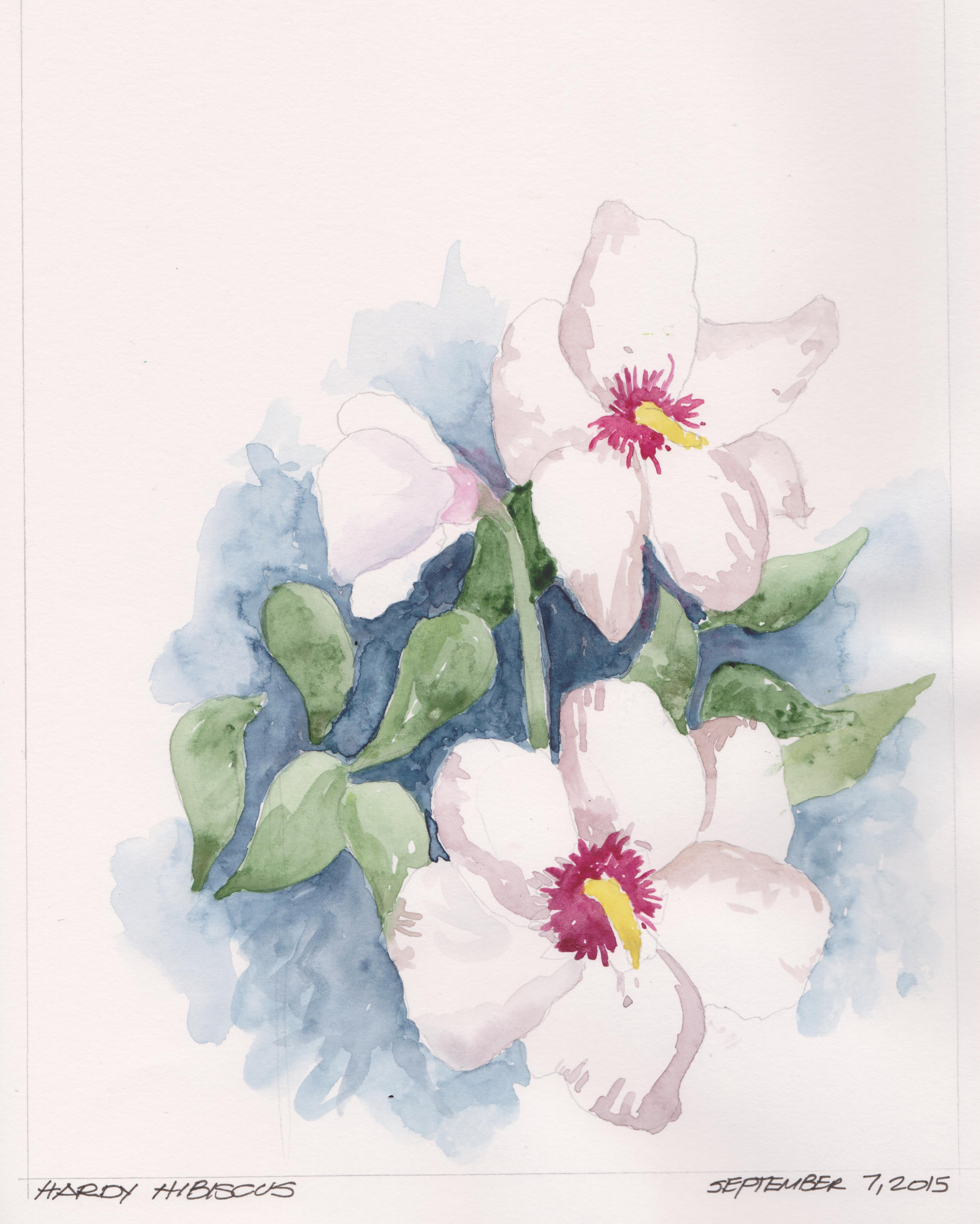
White Hibiscus

Another variety of Hardy Hibiscus or Swamp Rose. This color combination seems to be blooming now, a little later in the season than the red variety that I painted a little while back. This flower is all white with a purple center and yellow Stamen. Holbein and Daniel Smith watercolors in a Stillman and Birn Alpha Sketchbook.

2015-09-07 White Hibiscus

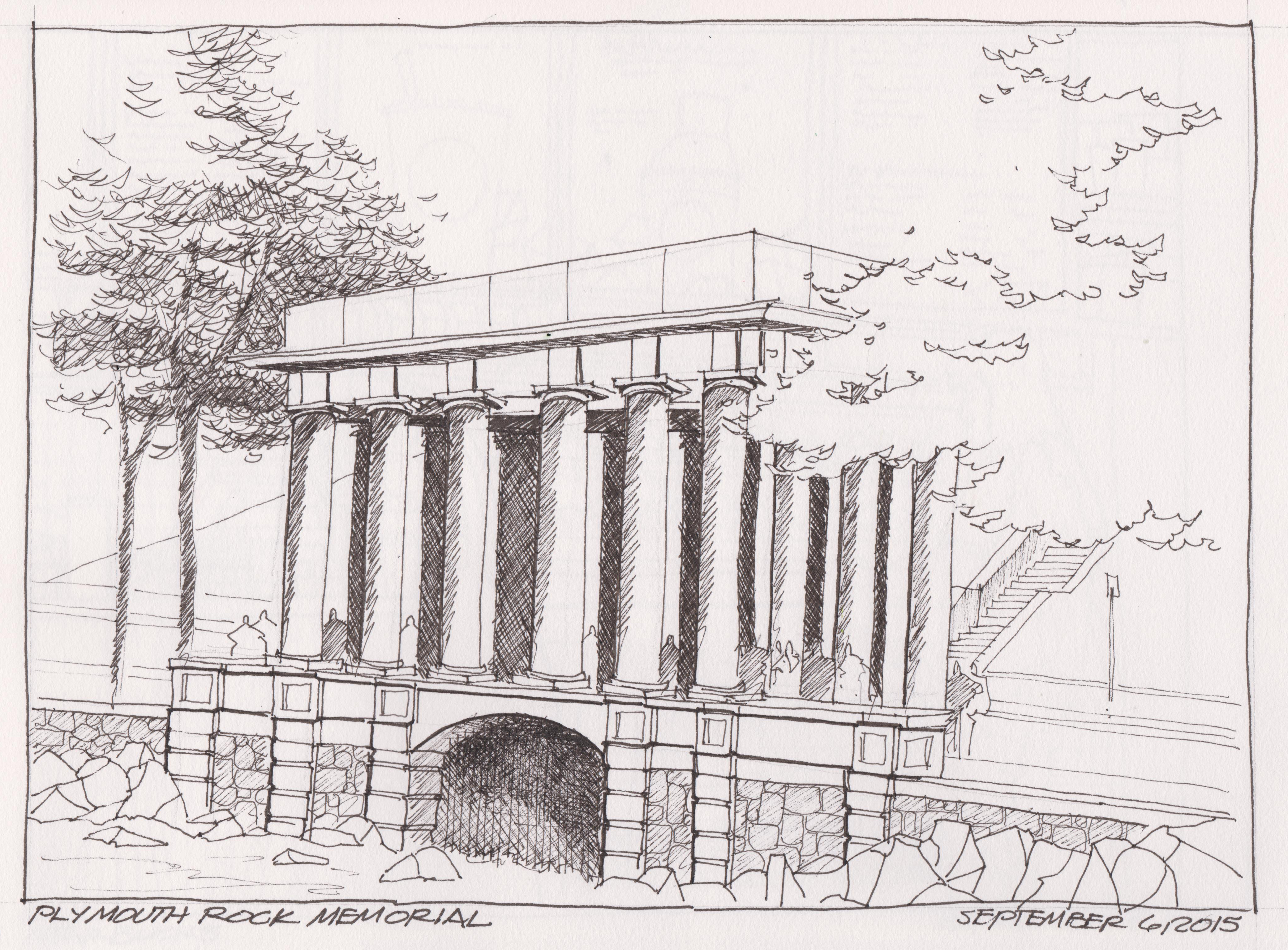
Plymouth Rock Memorial

The real Plymouth Rock was a boulder about fifteen feet long and three feet wide which lay with its point to the east, thus forming a convenient pier for boats to land during certain hours of tide. In 1920, the rock was found and the waterfront rebuilt to a design by noted landscape architect Arthur Ahcrcliff, with a waterfront promenade behind a low seawall, in such a way that when the rock was returned to its original site, it would be at water level. The care of the rock was turned over to the Commonwealth of Massachusetts, and a new very sober Roman Doric Portico designed by McKim, Mead and White for viewing the tide-washed rock protected by gratings. Faber-Castell Pitt black pens in a 9″ x 12″ Stillman and Birn Alpha Sketchbook.

2015-09-06 Plymouth Rock Memorial

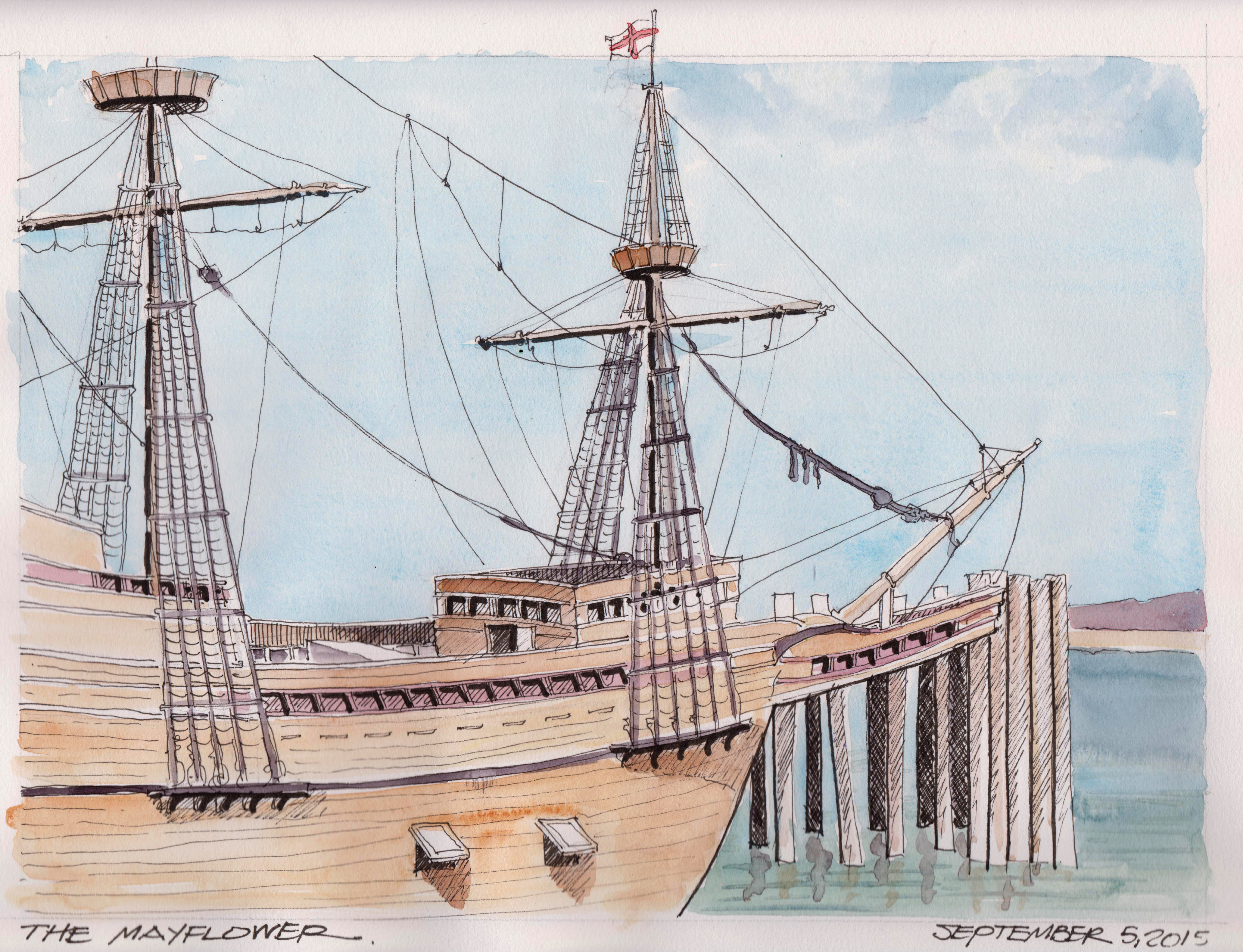
The Mayflower

The Mayflower was the ship that transported English Separatists, known today as the Pilgrims from Plymouth in England to the New World.  There were 102 passengers, and the crew is estimated to have been about thirty, but the exact number is unknown. This voyage has become an iconic story in some of the earliest annals of American History, with its story of death and of survival in the harsh New England winter environment. The culmination of the voyage in the signing of the Mayflower Compact was an event which established a rudimentary form of democracy, with each member contributing to the welfare of the community. The Mayflower stopped in what is now Provincetown and First Encounter Beach in Eastham prior to landing in what is now Plymouth, MA. This is actually a fully working replica of the original vessel in Plymouth Harbor. Ink with Holbein watercolors in a Stillman and Birn Sketchbook.

2015-09-05 Mayflower

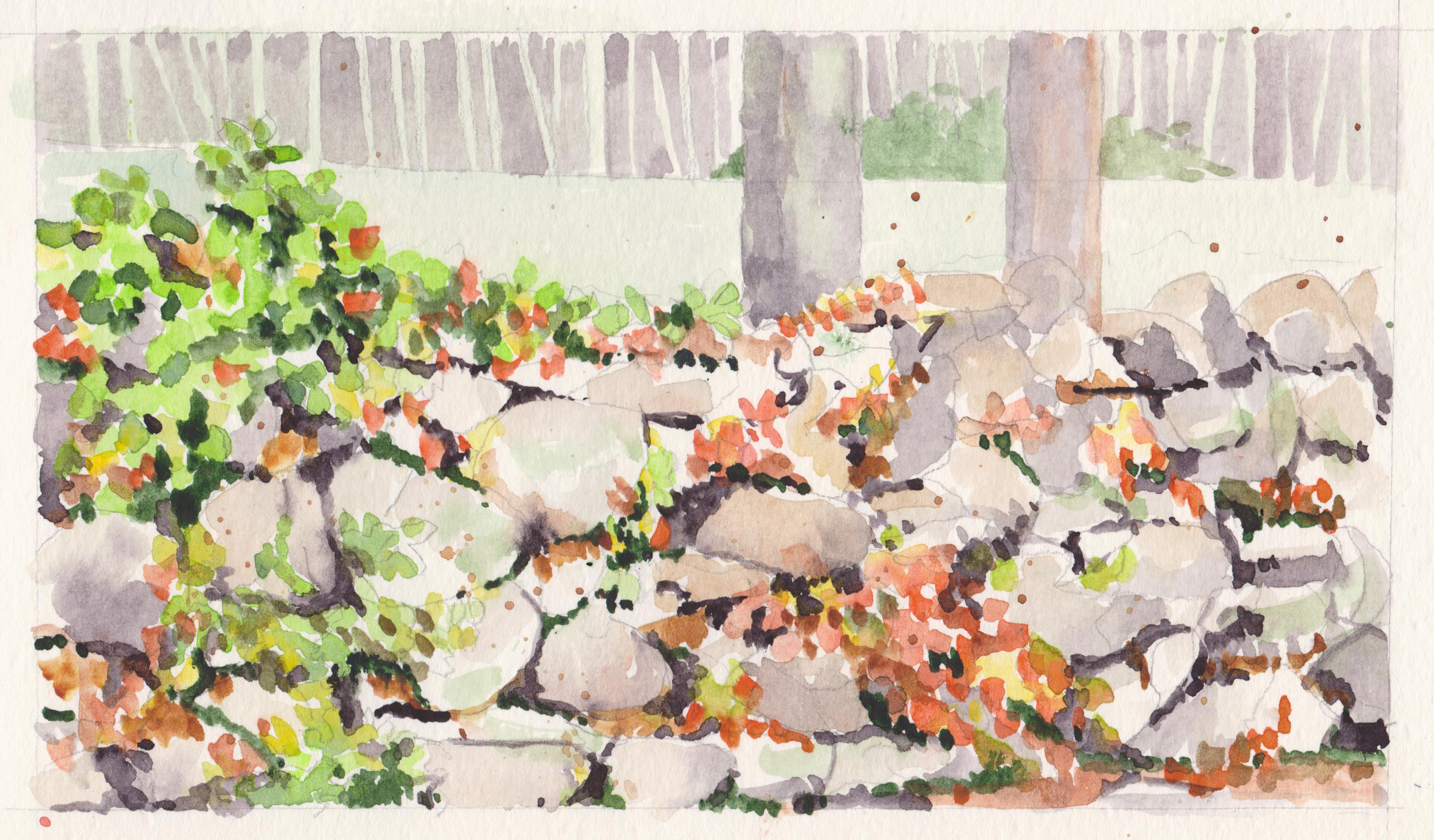
“Autumn is a second spring when every leaf is a flower.” – Albert Camus

While it is not yet fall here in the Northeast, there are starting to be subtle signs that autumn is around the corner. This is a typical New England stone wall that the farmers constructed from all of the stones that they would plow up while working the fields. These walls would separate the fields and properties. This image shows the green ivies in the sunshine on the left transitioning to the yellow and oranges of fall foliage on the right in the shadows. Holbein and Daniel Smith watercolors in a 5″ x 8″ Moleskine watercolor book.

2015-09-03 Stonewall