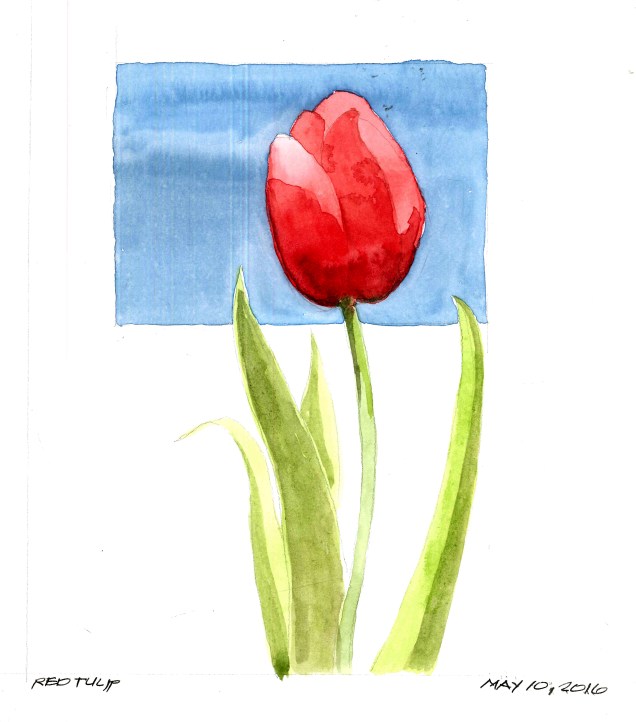
Red Tulip

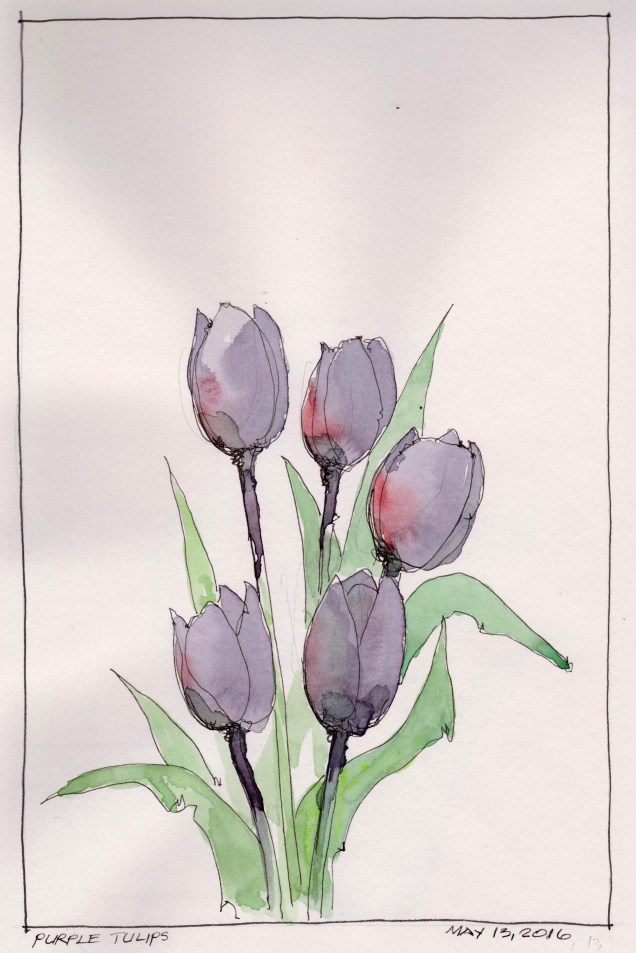
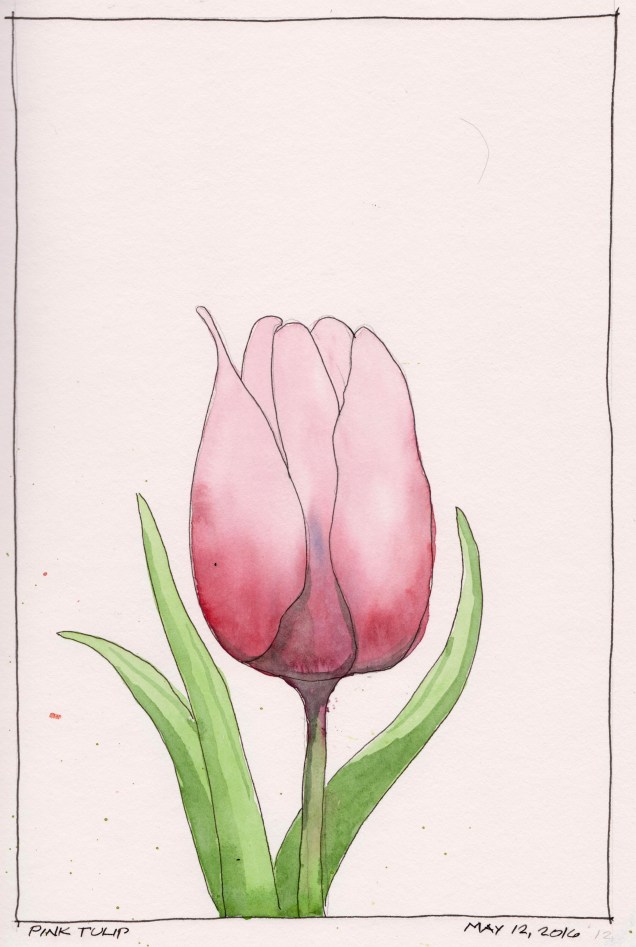
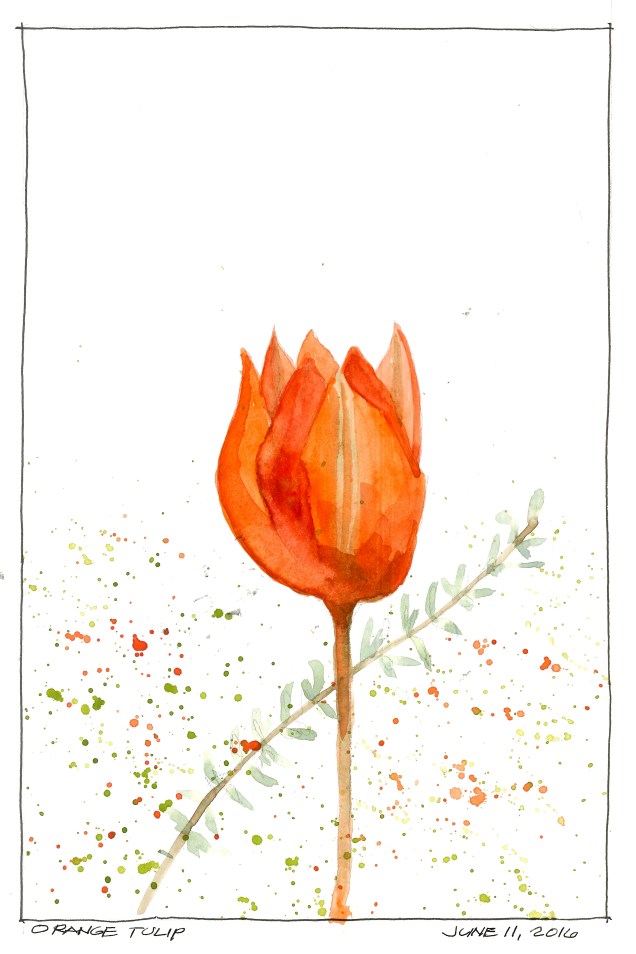
It was a pleasure to return from vacation and see our tulips at the house in full bloom. the weather was so cool and damp while we were away, that the blooms slowed down. Typically they are only in bloom for a day or 2 until the deer eat them. There are 4 colors and they are beautiful. Over the next few days I will be sketching each of them. Holbein and Daniel Smith watercolors in a Stillman and Birn sketchbook.

2016-05-10 Red Tulip

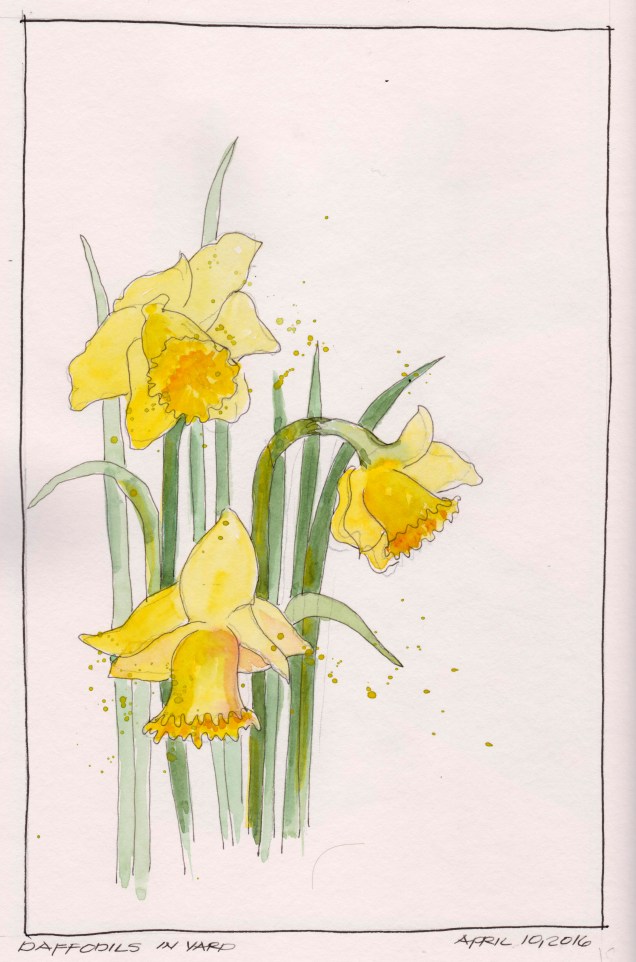
Daffodils

Narcissus is a genus of predominantly spring perennial plants. Various common names including daffodil, narcissus and jonquil are used to describe all or some members of the genus. Narcissus has conspicuous flowers with six petal-like tepals surmounted by a cup- or trumpet-shaped corona. The flowers are generally white or yellow (orange or pink in garden varieties), with either uniform or contrasting colored tepals and corona. Pilot Falcon fountain pen with Noodler’s black ink and Holbein watercolors in a Stillman and Birn sketchbook.

2016-04-10 Daffidols


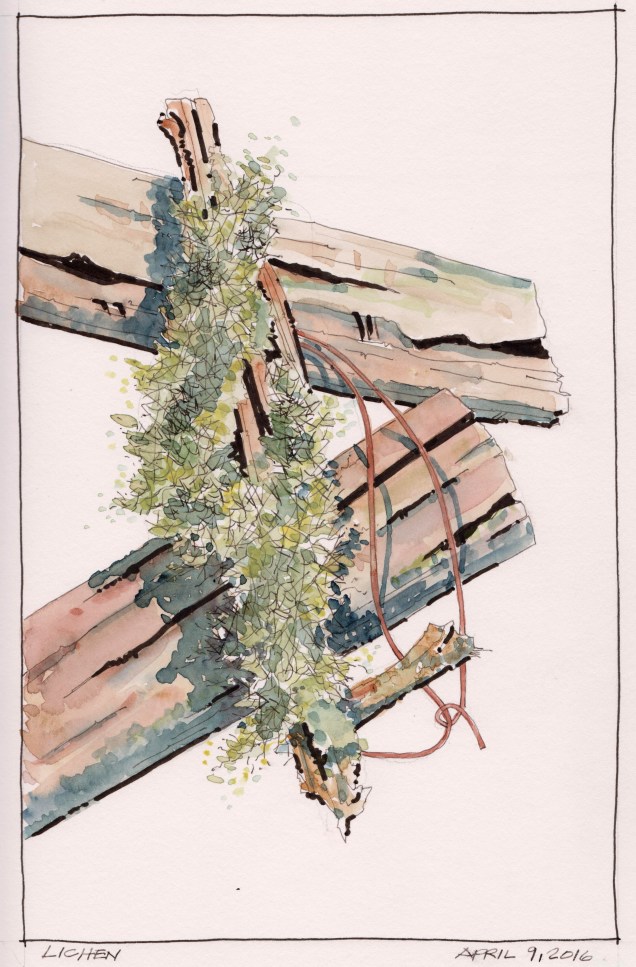
Lichen

We noticed on our last visit to the Cape that there seems to be much more lichen on the trees that we have noticed before. This is a piece of a branch found during my Spring yar clean-up yesterday. Lichens occur from sea level to high alpine elevations, in a very wide range of environmental conditions, and can grow on almost any surface. Lichens are abundant growing on bark, leaves, mosses, on other lichens, and hanging from branches “living on thin air”. It is estimated that 6% of Earth’s land surface is covered by lichen. Colonies of lichens may be spectacular in appearance, dominating much of the surface of the visual landscape in forests and natural places, such as the vertical “paint” covering the vast rock faces of Yosemite National Park. Pilot Falcon fountain pen with Noodler’s black ink and Holbein watercolors in a Stillman and Birn sketchbook.

2016-04-09 Lichen

Asparagus

Asparagus is a herbaceous, perennial plant growing to 39–59 inches tall, with stout stems with much-branched, feathery foliage. The “leaves” are in fact needle-like cladodes (modified stems) in the axils of scale leaves; they are 0.24–1.26 inches long and 1 mm (0.039 in) broad, and clustered four to 15 together, in a rose-like shape.  Theflowers are bell-shaped, greenish-white to yellowish, with six tepals partially fused together at the base; they are produced singly or in clusters of two or three in the junctions of the branchlets. It is usually dioecious, with male and female flowers on separate plants, but sometimes hermaphrodite flowers are found. Pilot Falcon fountain pen with Noodler’s Black ink and Holbein watercolors in a Stillman and Birn sketchbook.
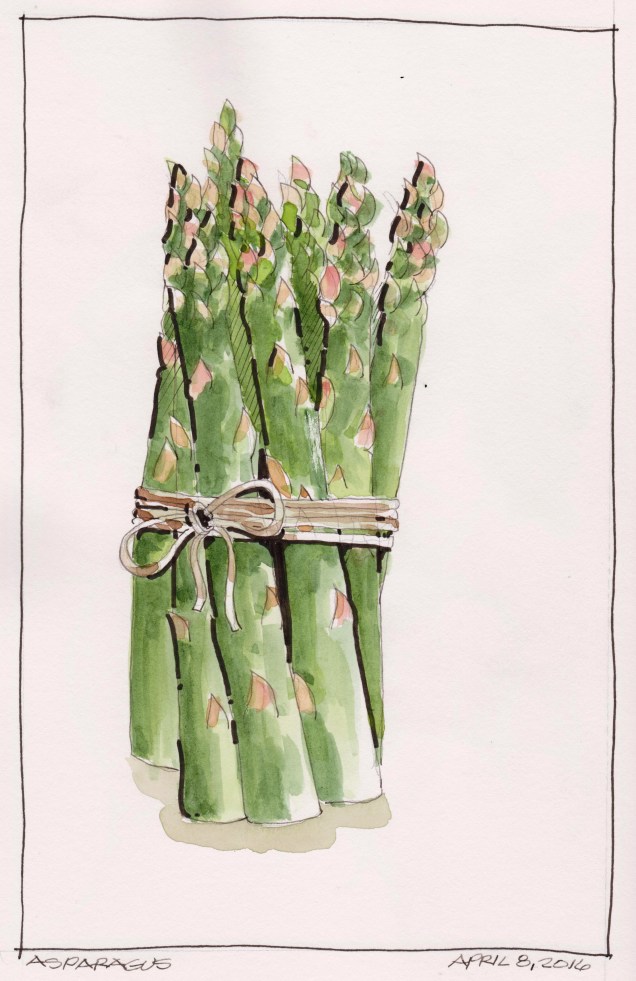
2016-04-08 Asparagus

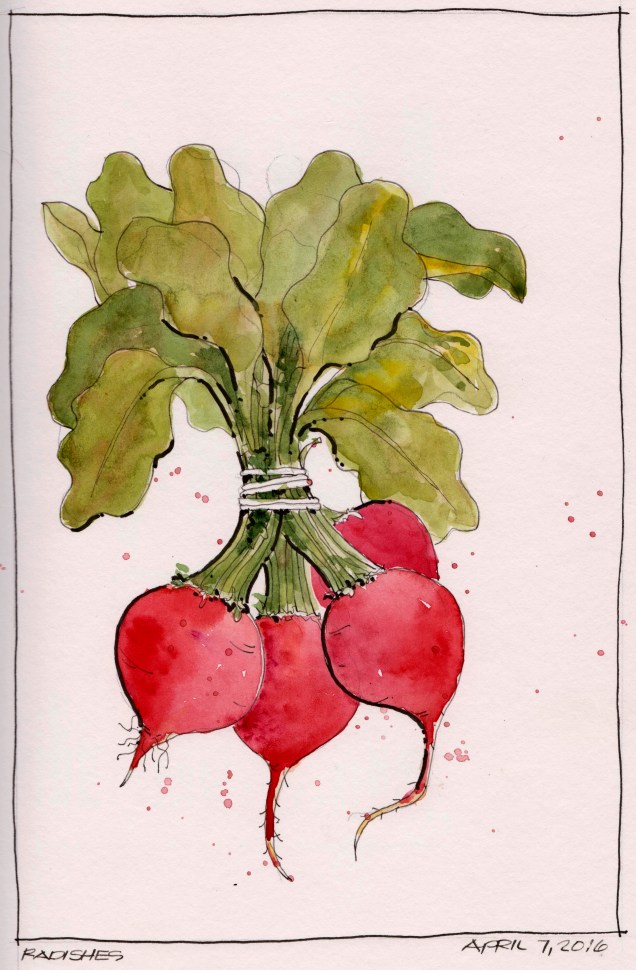
Radishes

The Radish is an edible root vegetable that was domesticated in Europe in the pre-Roman times. Radishes are grown and consumed throughout the world, being mostly eaten raw as a crunchy salad vegetable. They have numerous varieties, varying in size, flavor, color, and length of time they take to mature. Radishes of spicy varieties owe their sharp flavor to the various chemical compounds produced by the plants. They are sometimes grown as companion plants and suffer from few pests and diseases. They germinate quickly and grow rapidly, smaller varieties being ready for consumption within a month, while larger daikon varieties take several months. Another use of radish is as cover or catch crop in winter or as a forage crop. Pilot Falcon fountain pen with Noodler’s Black ink and Holbein watercolors in a Stillman and Birn sketchbook.
2016-04-07 Radishes

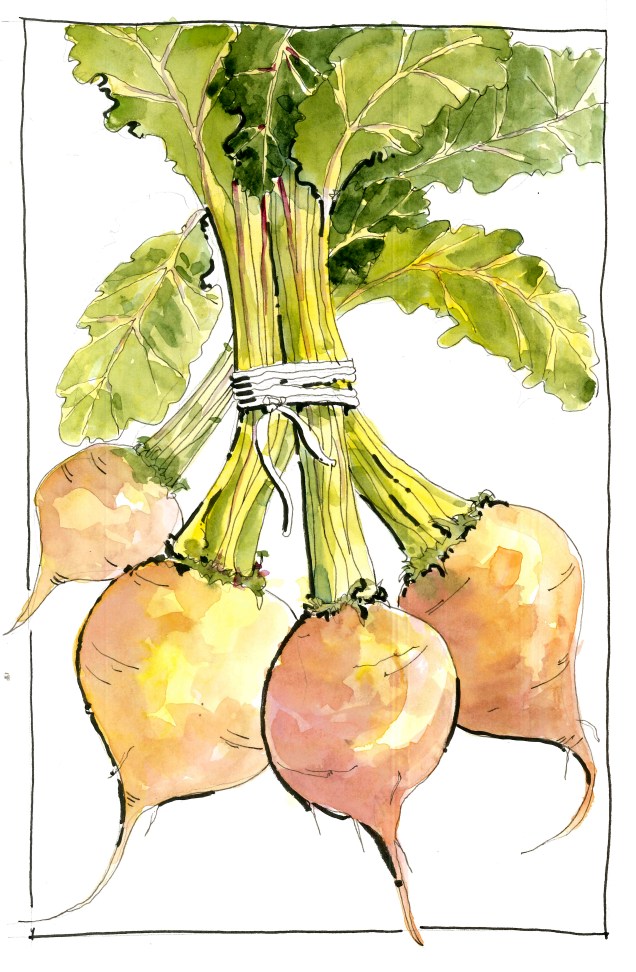
Golden Beets

Another variety of the beetroot. This sketch is of the Golden Beet which is a beautiful golden yellow in the inside and tastes like it’s more familiar cousin, the purple beet. It is several of the cultivated varieties grown for their edible taproots and their leaves (called beet greens). Other than as a food, beets have use as a food coloring and as a medicinal plant. Pilot Falcon fountain pen with Noodler’s black ink and Holbein watercolors in a Stillman and Birn sketchbook.
2016-04-6 Golden Beets

Purple Beets

The beetroot is the taproot portion of the beet plant, usually known in North America as the beet, also table beet, garden beet, red beet or golden beet. It is several of the cultivated varieties grown for their edible taproots and their leaves (called beet greens). Other than as a food, beets have use as a food coloring and as a medicinal plant. Pilot Falcon fountain pen with Noodler’s black ink and Holbein watercolors in a Stillman and Birn sketchbook.
2016-04-05 Purple Beets