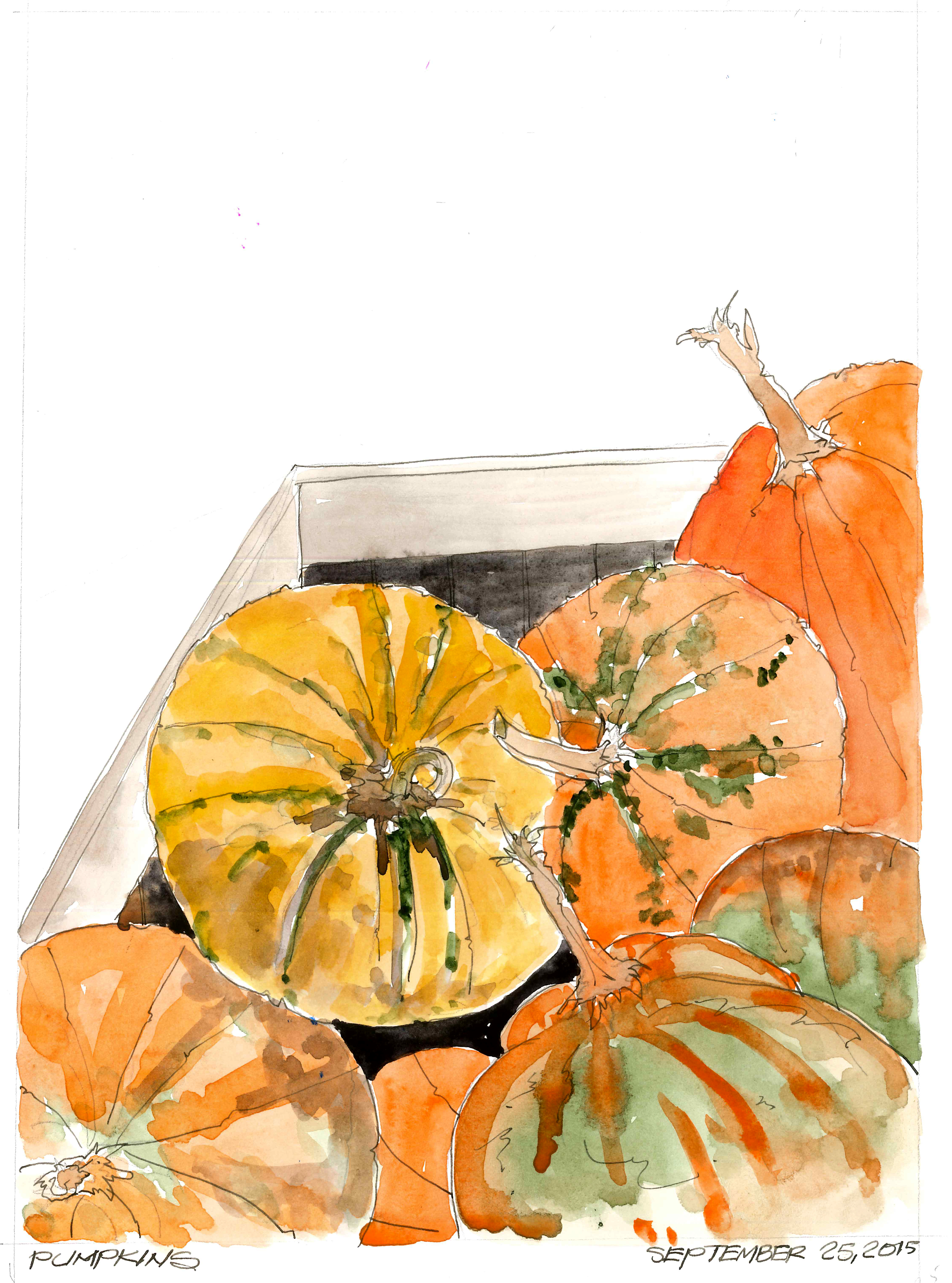
There are so many varieties of asters that grow in the Northeast and I might have been hasty in noting that this was the Frikarth “Monch” variety. After further research, I believe that is actually could be the Aster Laevis “Bluebird” in the front planting bed in the front of our house. The ‘Bluebird’ is a superlative selection of the native smooth aster. This tall, vase-shaped wildflower has large 1″ diameter blue flowers held in cloud-like clusters at the tips of the arching branches. Staking is helpful by late summer if you forget to pinch. Aster laevis is a great source of nectar for migrating monarchs and other late season butterflies. Holbein watercolors with Pitt Art pens in a Stillman and Birn sketchbook.
Watercolor
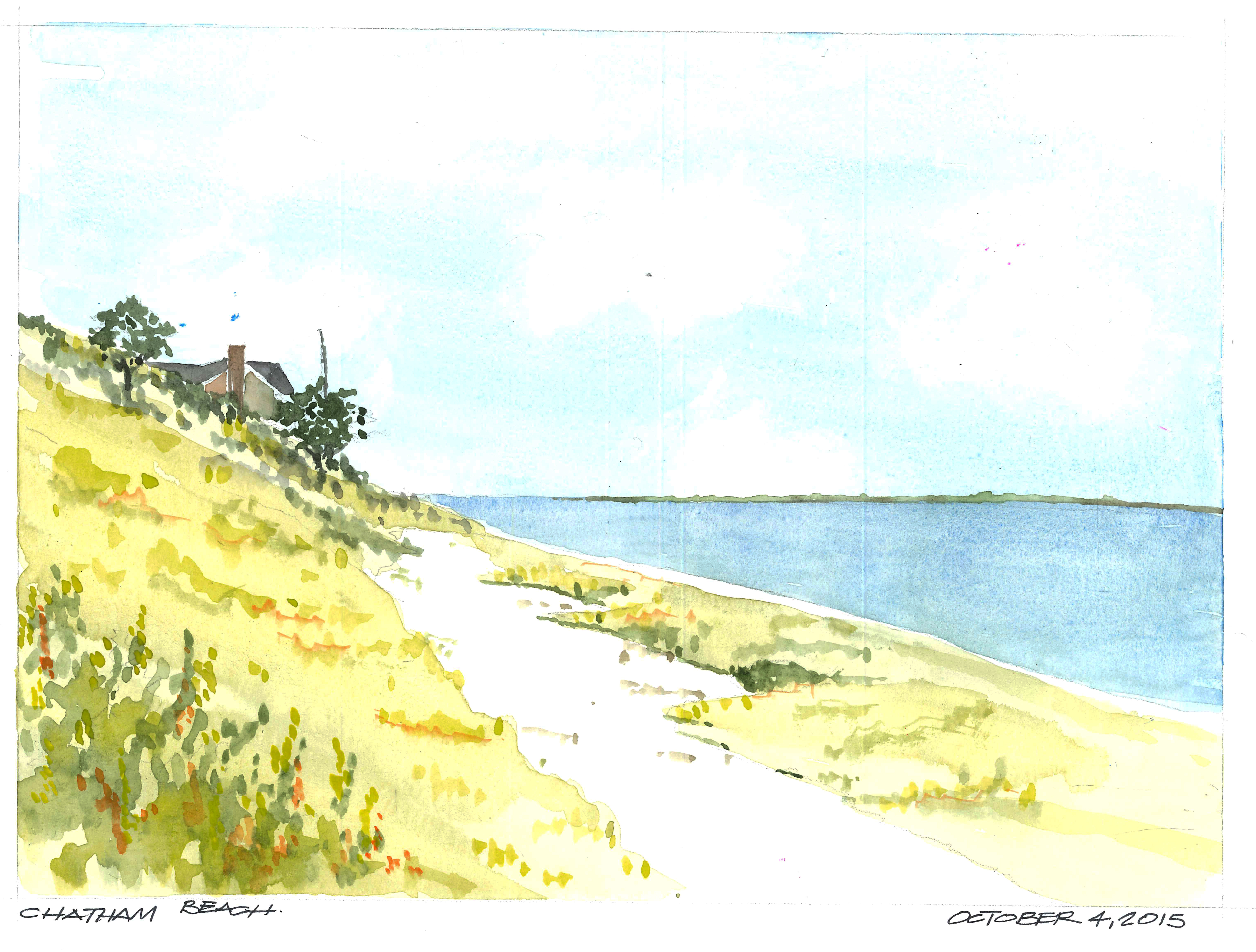
Chatham Lighthouse Beach
Lighthouse Beach in Chatham, Massachusetts, is a beautiful, large beach close to the center of the picturesque town of Chatham. It is located across the street from a small Coast Guard Station and the Chatham Light lighthouse. This area was not much of a beach until the Great Barrier Beach broke due to pounding storm swells and hurricanes. The Chatham Break, as it is called, is a growing ocean channel between Nauset Beach and Monomoy Island. This new channel has shifted a significant amount of sand from the north to the south and created this magnificent beach. Nauset Beach protects it from heavy swells, but you can watch the waves crest about 200 yards away at the break. Beach grass, small dunes, and million-dollar homes surround the vast sand beach. Holbein watercolors in a Stillman and Birn sketchbook.
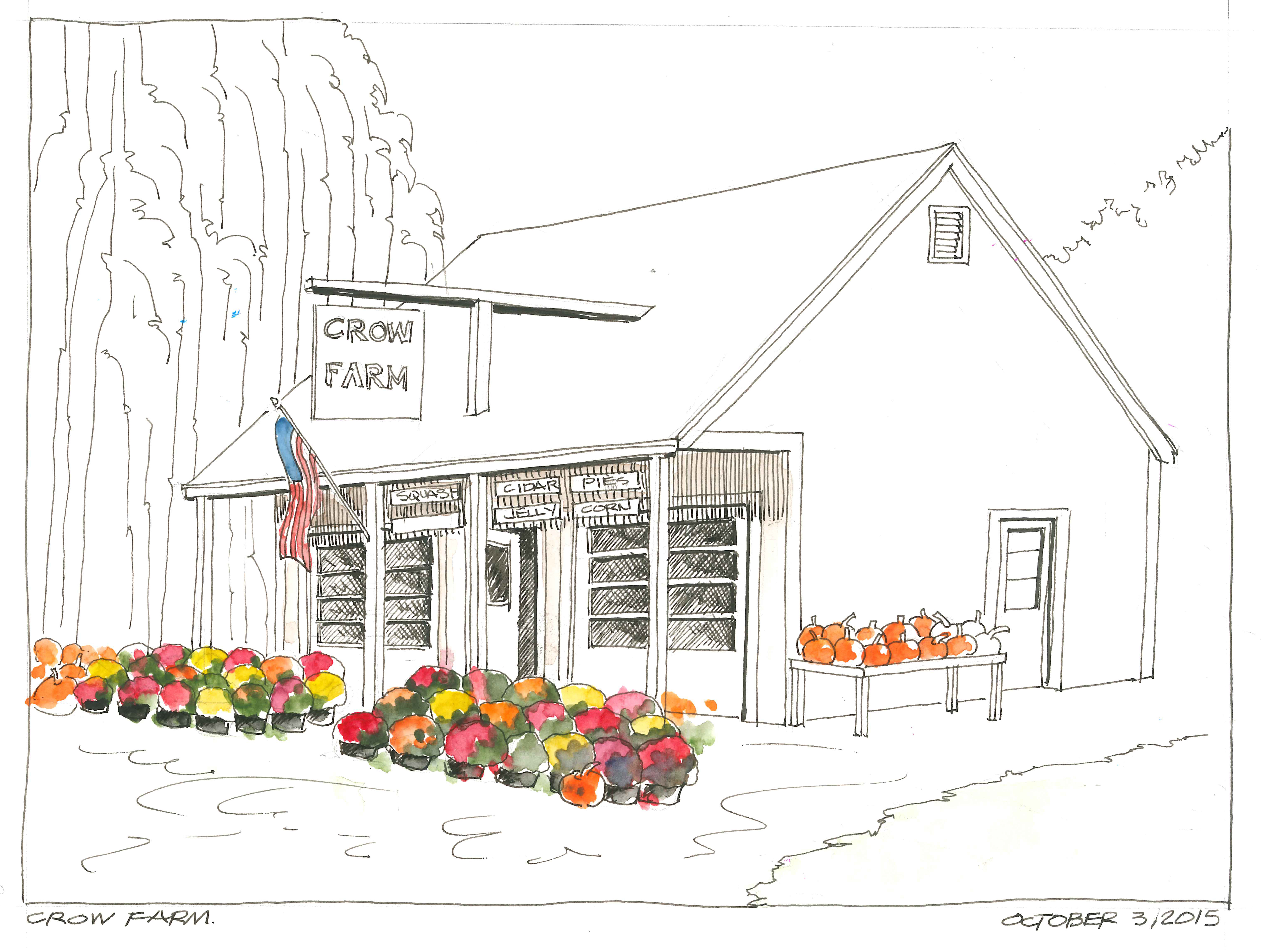
Crow Farm
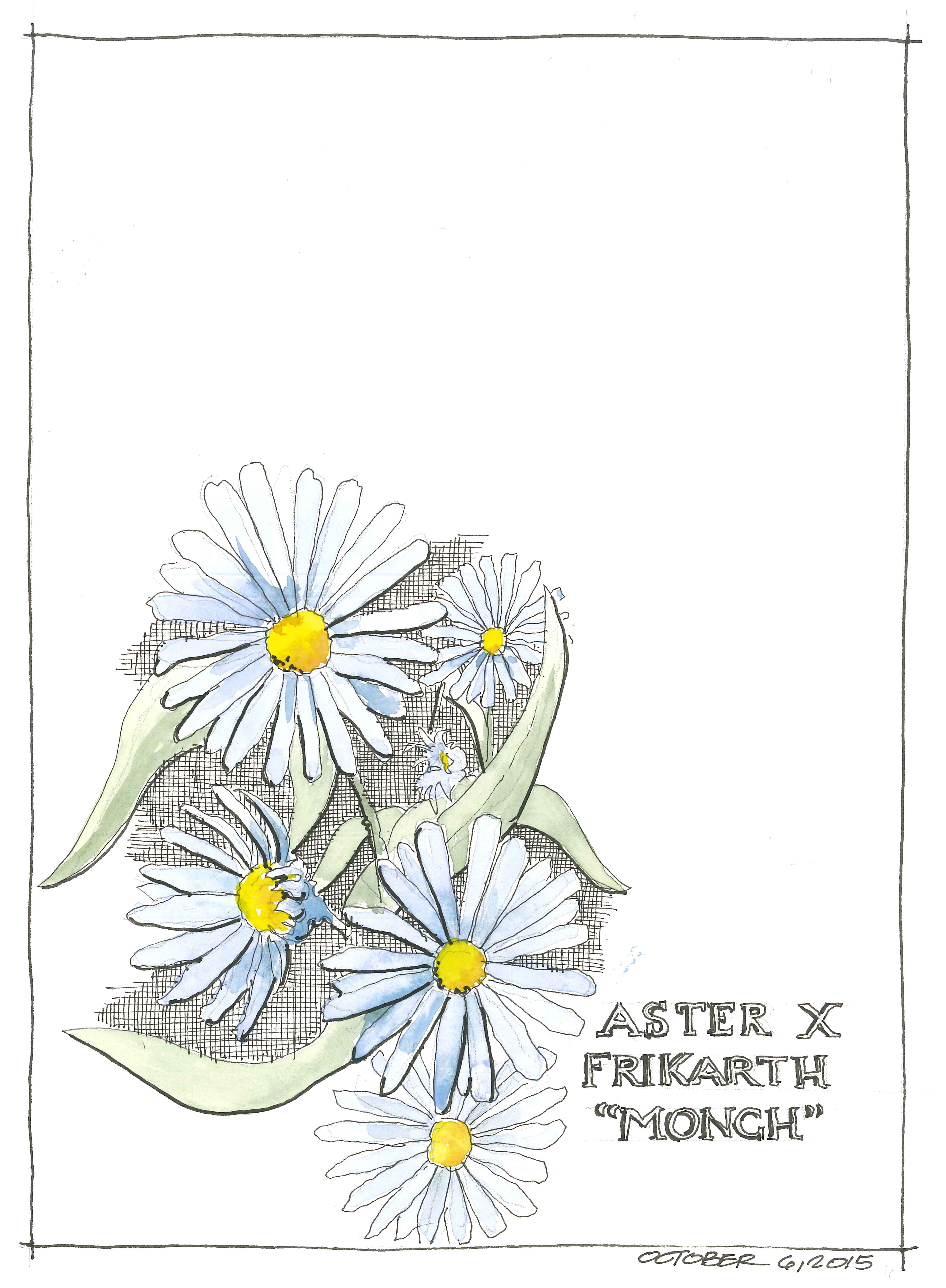
A beautiful drive on Cape Cod and we came across a great farm stand. The forty-acre farm is run by Howard Crowell his son Paul, and grandson Jason. In 2016, we will be celebrating their one-hundredth year of providing fresh produce and other local products to our community. It is one of the only farms on Cape Cod to grow apples (15 unique varieties!), pears, peaches, and sweet corn, locally known as “Crow Farm Corn.” In 1916, David and Lincoln Crowell purchased forty acres of farmland and began a family tradition that has continued into the next century. The current farm stand opened on Route 6A in 1960. Lamy Safari fountain pen with Noodler’s black ink and Pelikan watercolors in a Stillman and Birn sketchbook.
Cranberries
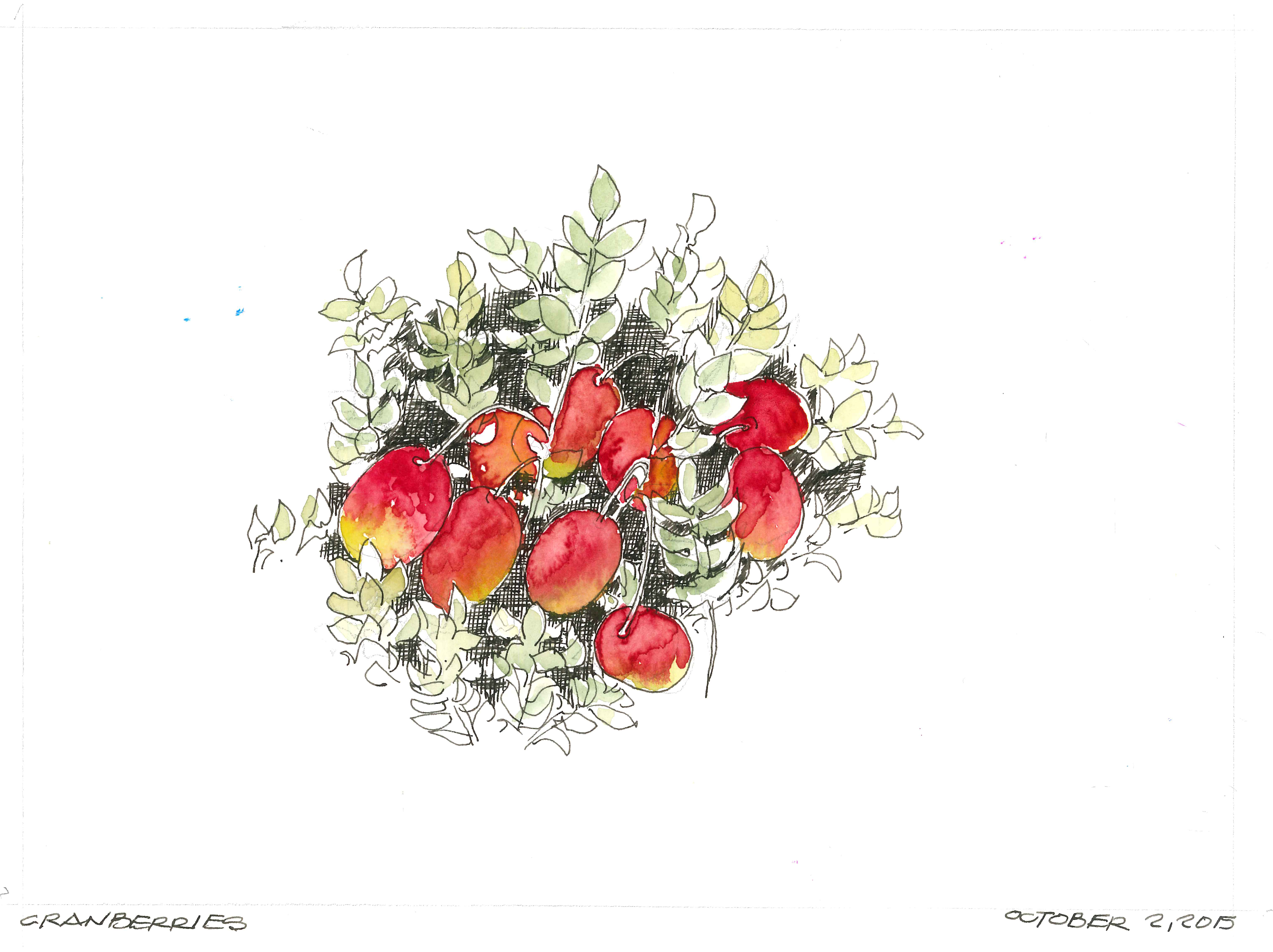
Cranberries are low, creeping vines up to 7 feet long and 2 to 8 inches in height; they have slender, wiry stems that are not thickly woody and have small evergreen leaves. The flowers are dark pink. They are pollinated by bees. The fruit is a berry that is larger than the leaves of the plant; it is initially white, but turns a deep red when fully ripe. It is edible, with an acidic taste that can overwhelm its sweetness. Most cranberries are processed into products such as juice, sauce, jam, and sweetened dried cranberries, with the remainder sold fresh to consumers. Cranberry sauce is a traditional accompaniment to turkey at Christmas dinner in the United Kingdom and Thanksgiving dinners in the United States and Canada. Lamy fountain pen with Noodler’s Black Ink and Holbein watercolors in a Stillman and Birn sketchbook.
Highland Bog
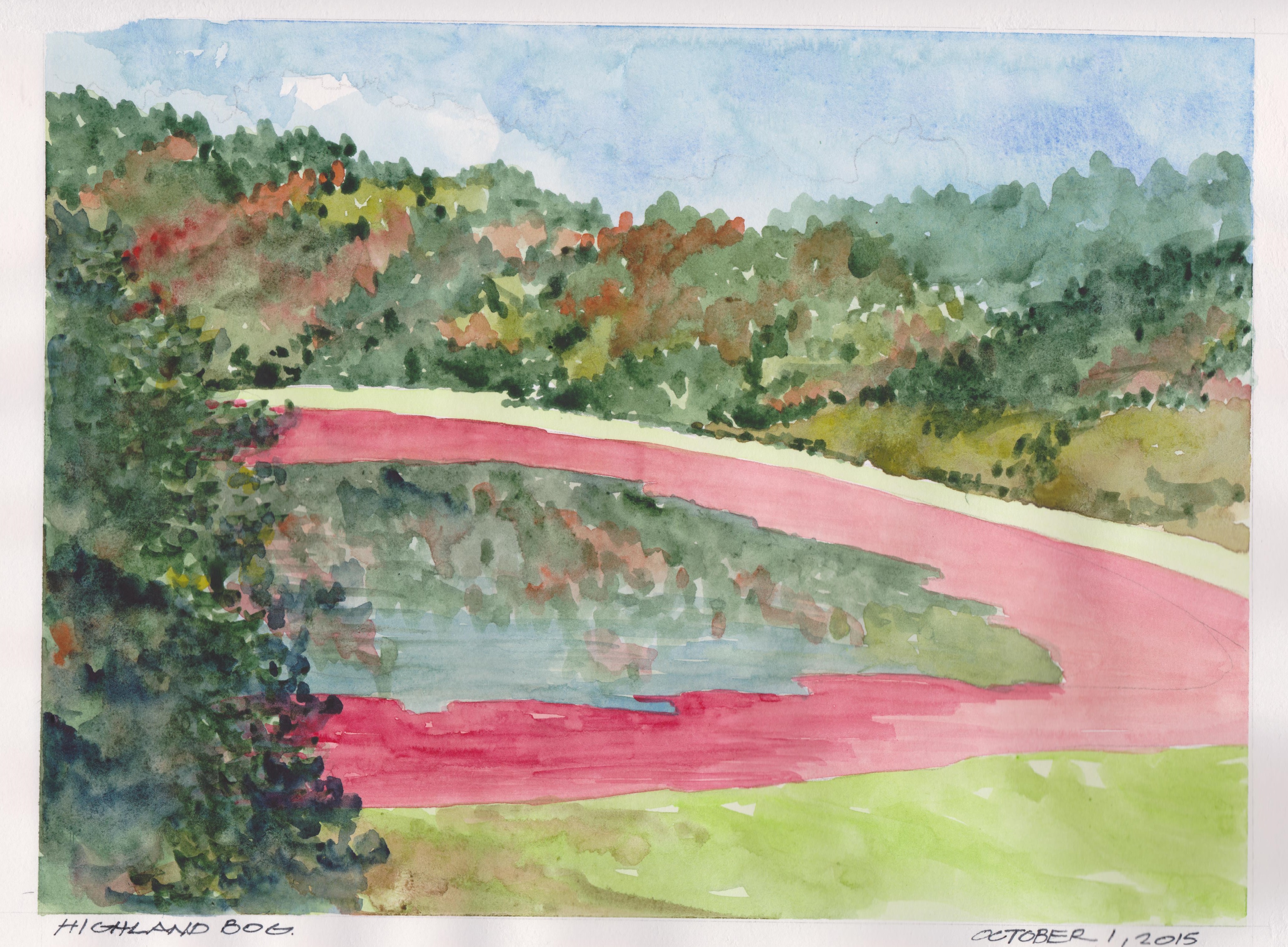
Fall in New England is almost all about the fall colors which are spectacular. The trees are just starting to turn here in southern New England as you can see in my sketch. The fall is also cranberry season in New England. This sketch of a cranberry bog near our house shows another vibrant color of the fall. This bog is being wet picked, which means that the bog is flooded with water and the berries are dislodged from the vines and float to the surface. The wind usually pushes them to one end of the bog where the berries are corralled and sucked up into waiting trucks. This method of picking can only be used for juices in that the berries get water logged and cannot be used as fresh fruit. A beautiful site as you travel around this area and see the flooded bogs with the vibrant pink-burgundy berries floating. Holbein watercolors in a Stillman and Birn Alpha series sketchbook.
Autumn carries more gold in its pocket than all the other seasons. ~Jim Bishop
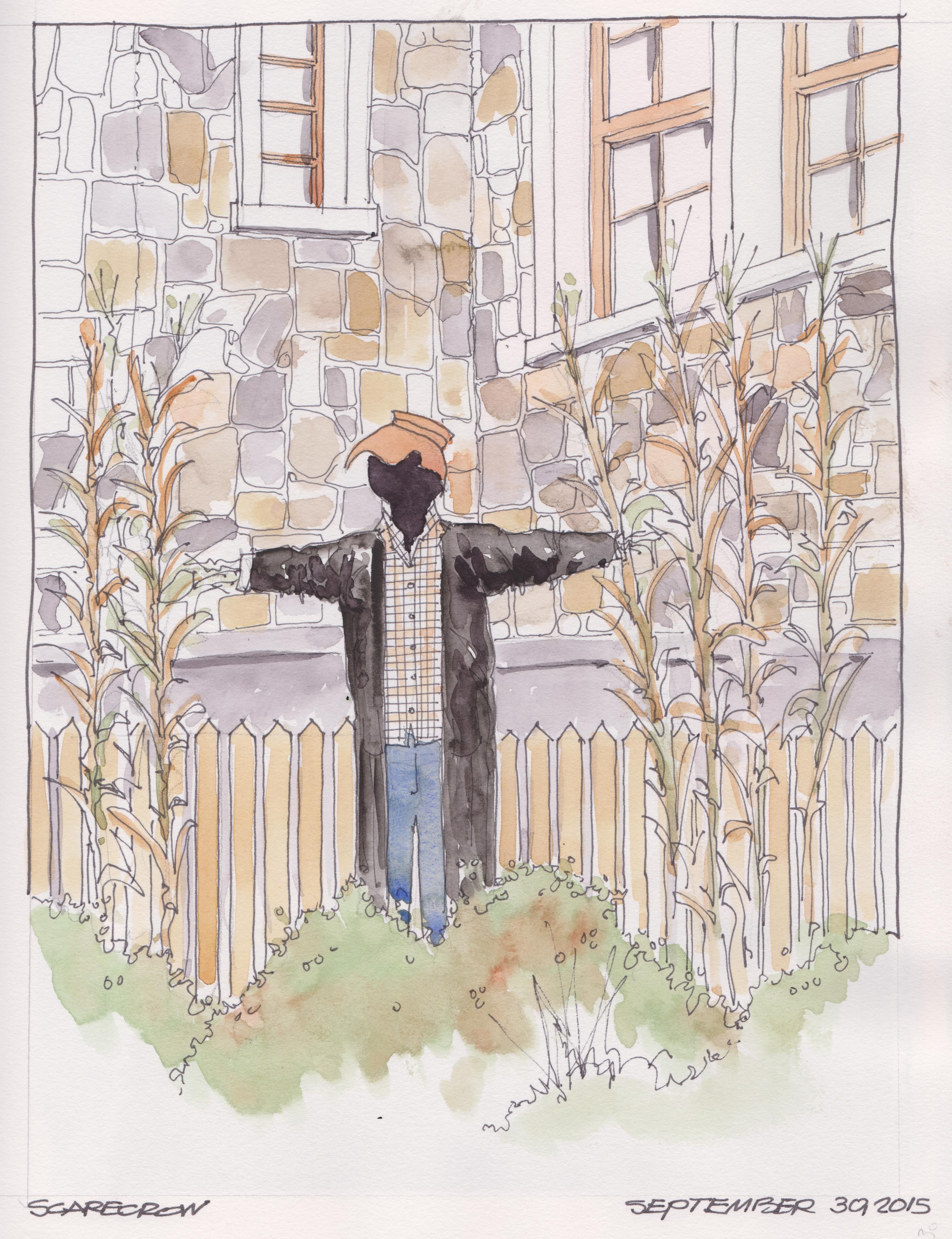
Autumn, interchangeably known as fall in North America, is one of the four temperate seasons. Autumn marks the transition from summer into winter, in September, when the arrival of night becomes noticeably earlier and the temperature cools considerably.Association with the transition from warm to cold weather, and its related status as the season of the primary harvest, has dominated its themes and popular images. In Western cultures, personifications of autumn are usually pretty, well-fed females adorned with fruits, vegetables and grains that ripen at this time (or a scarecrow in this case in front of our favorite coffee shop).
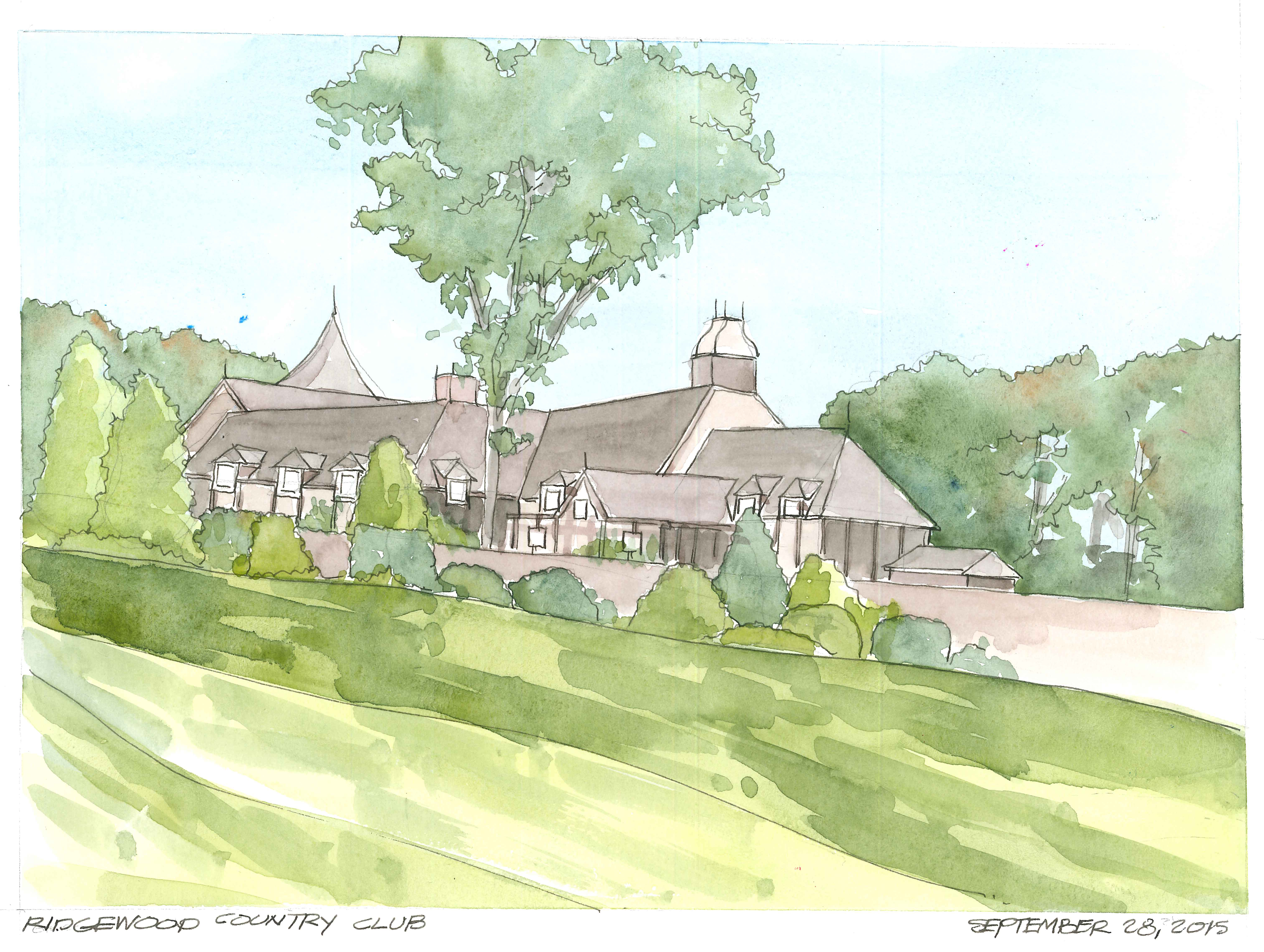
Ridgewood Country Club from the range
Another road trip to New Jersey for work and another visit to Ridgewood Country Club in Paramus, New Jersey. I borrowed a cart this time and had a different view from the driving range. It is a beautiful structure with real slate roofs, stone, brick and some half-timber construction. Pilot Namiki Falcon fountain pen with Noodler’s black ink and Pelikan watercolors.
Falmouth Harbor
A beautiful early fall day on Cape Cod. While Lisa was walking along Falmouth Heights, I sat on the seawall and enjoyed the view of the entrance to Falmouth Harbor. The sun was very bright and created a silhouette of the jetties that form the mouth of the harbor entry. Pelikan watercolors in a Stillman and Birn Alpha sketchbook.
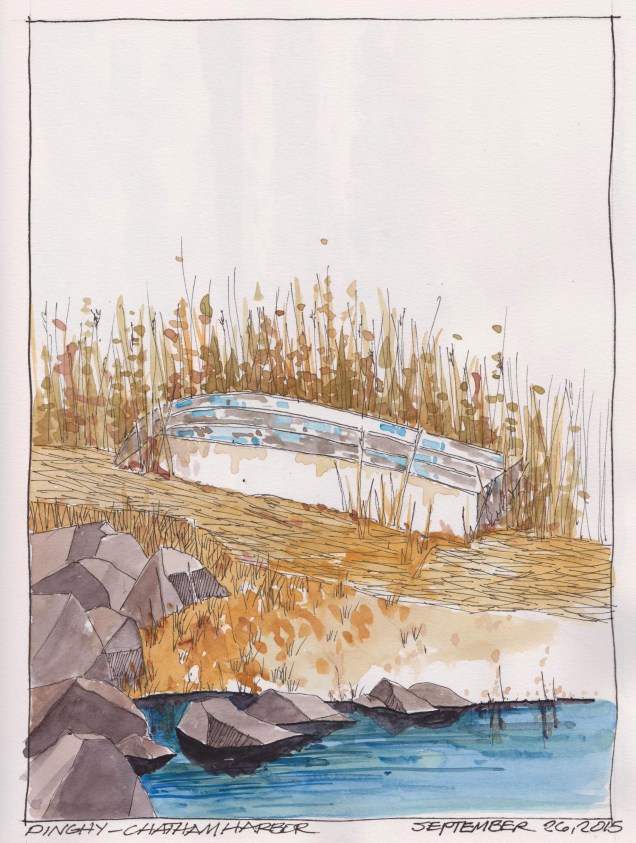
Dinghy
This little dinghy looked as if it was washed up on the shore and came to rest in the flattened sea grass. Faber-Castell Pitt pens with Holbein watercolors in a Stillman and Birn sketchbook.